Power Outages: What It Means and What to Do
Losing power is disorienting, and the first question is always the same: is this just us, or the whole street?
Here's how to tell the difference, what's actually gone wrong, and what to do about it.
Ring (02) 9538 7356 and describe what you're seeing, and we'll help narrow it down.
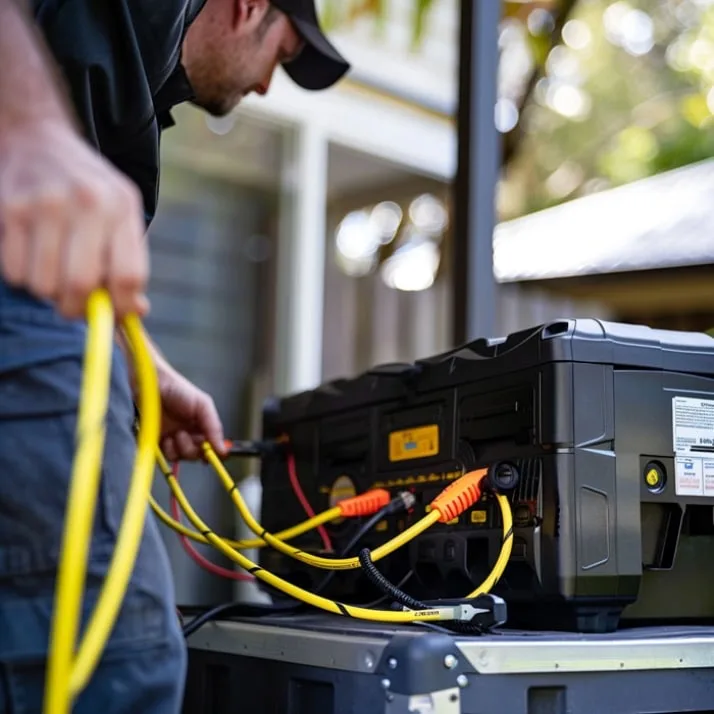
What a Power Outage at Home Actually Means
Not every blackout is the same kind of problem.
A whole-house outage usually means the main switch has tripped, a major fault has taken the board offline, or damaged wiring has cut supply somewhere between the meter and your circuits.
A partial outage, some rooms dark and others fine, points somewhere more specific: a single circuit breaker, a dead safety switch, or a fault confined to one part of the house.
Either way, the switchboard is where the answer lives, and it's the first thing we check.
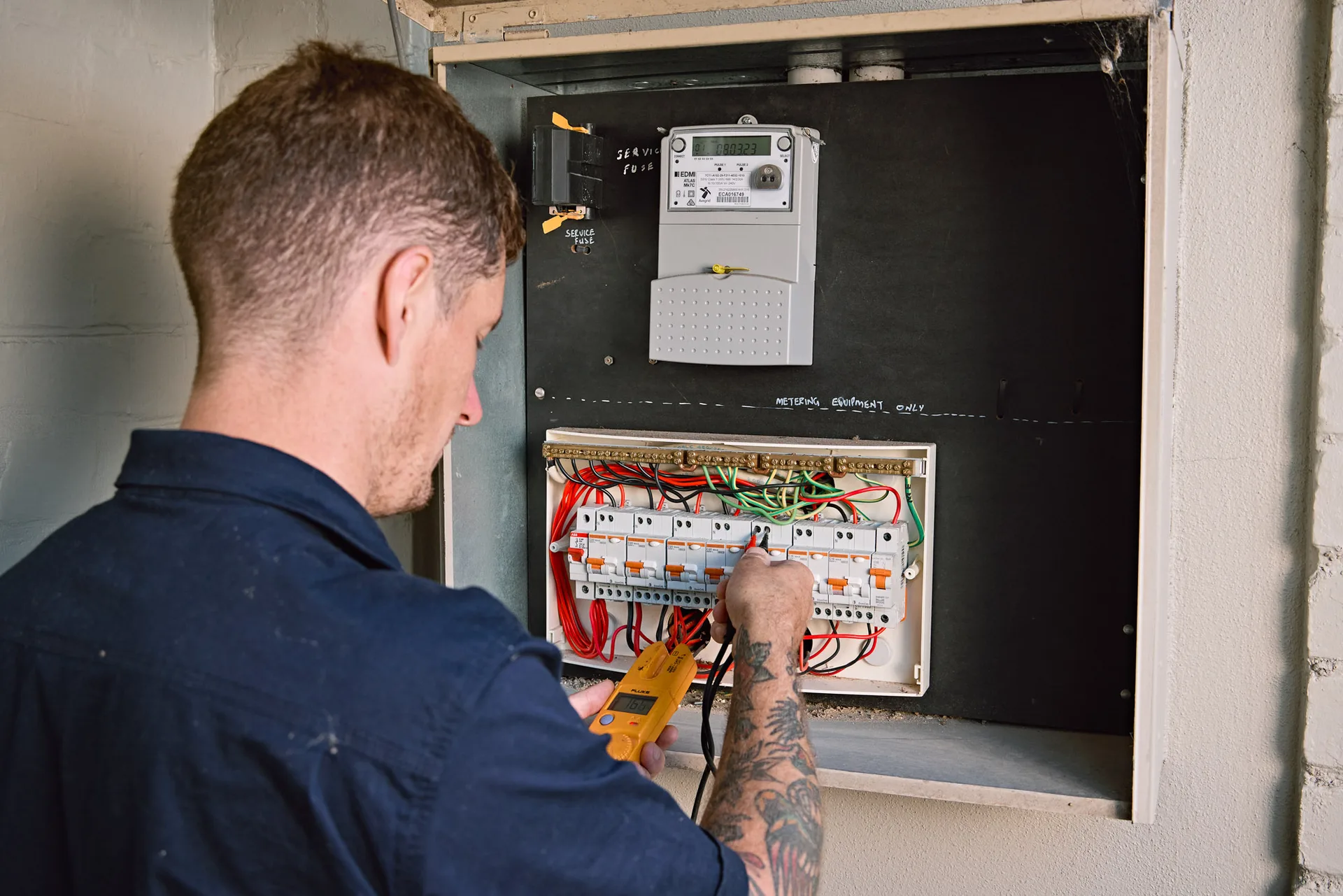
The Most Likely Causes
From most common to least, in our experience:
- A tripped main switch or safety switch: the whole board's protection reacting to a fault somewhere in the house
- An overloaded circuit: too much drawn at once, tripping protection before wiring overheats
- A faulty appliance: something plugged in drawing current the board reads as unsafe
- Damaged or aged wiring: insulation breaking down enough to cause a fault to earth
- A failing switchboard component: an old board with a part simply reaching end of life
- Moisture: water reaching a circuit, an outdoor point, or the switchboard itself
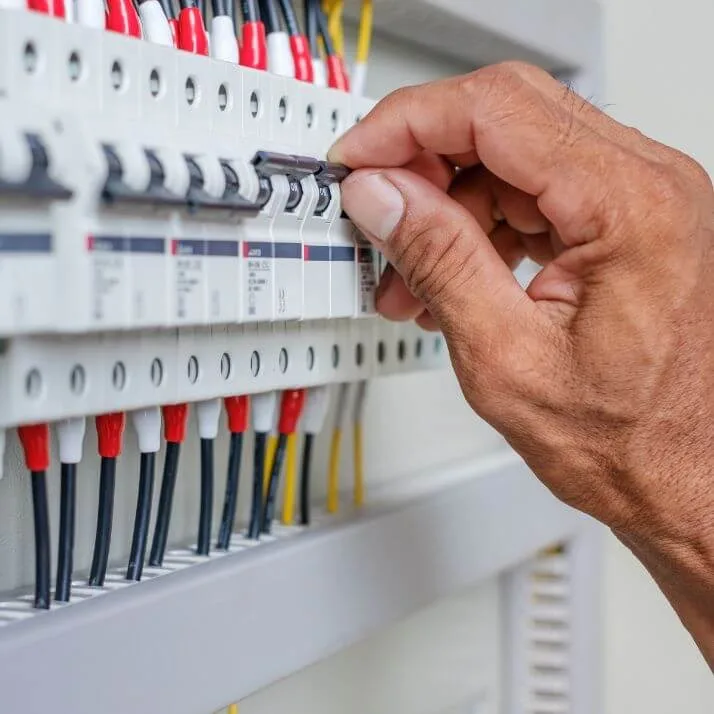
Is a Power Outage Dangerous?
Usually not, once you've confirmed it isn't a street-wide event. Sometimes it's a genuine warning sign.
Call now if there's any hint of a hot-plastic or burning odour around the board, visible scorching or discolouration, or the same outage returns within minutes of resetting it.
A single clean trip that resets and holds is a nuisance worth booking in, not an emergency.
If half the street is also dark, that's a network issue outside your switchboard, and outside what any electrician can fix on the spot.
Everything from your switchboard in, though, is exactly our job, and it's the part worth getting checked properly.
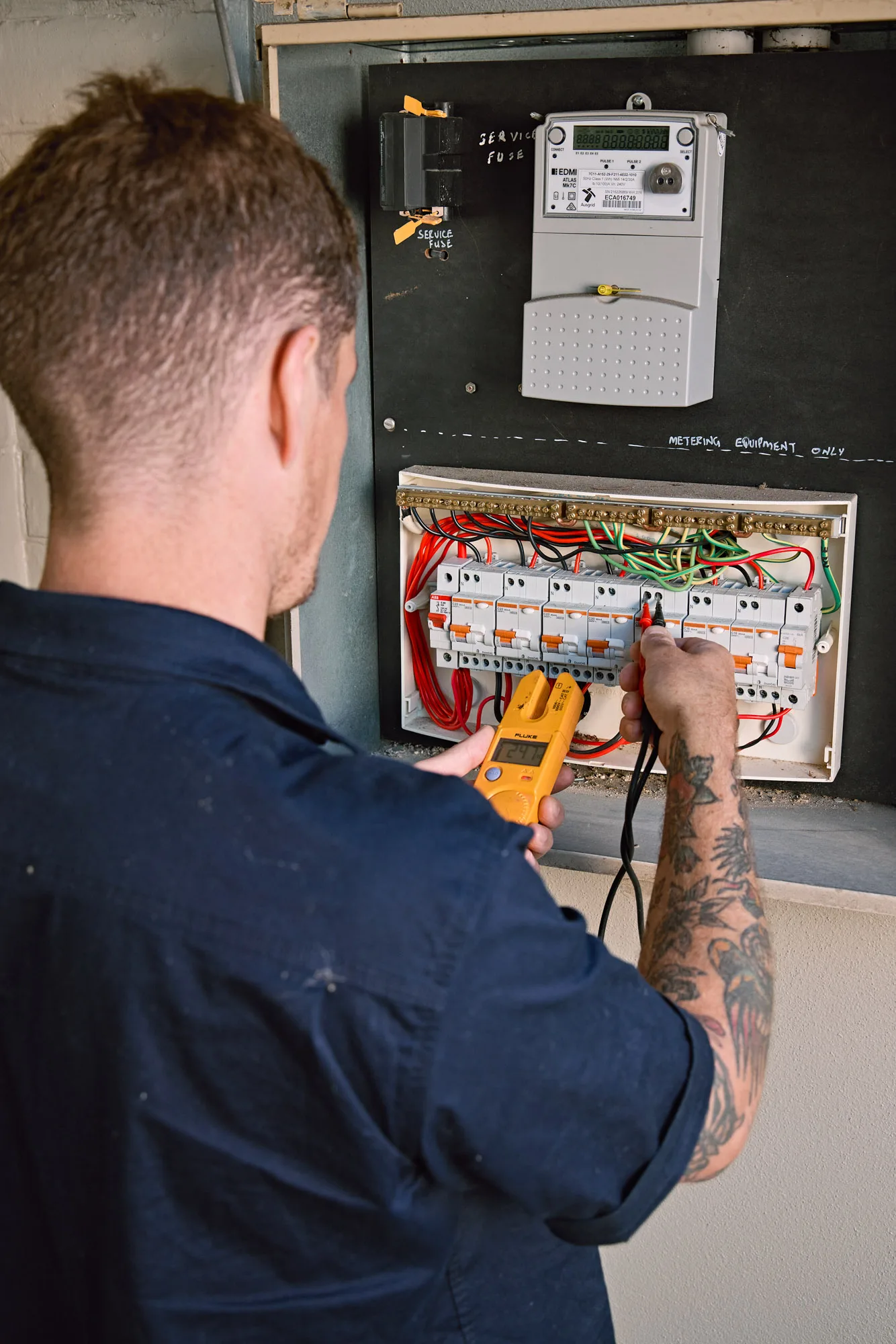
What To Do Right Now
- Check the street. Are neighbours' lights on? If the whole street is dark, it's a supply issue, not your home's wiring.
- Look at your switchboard. A switch sitting in the down position is usually easy to spot.
- Unplug recent additions. If something was just plugged in when power dropped, that's your likely cause.
- Call (02) 9538 7356 if resetting the switch doesn't hold, or you're not confident checking the board yourself.
How We Fix and Certify the Repair
We start at the switchboard, testing the main switch, safety switches and individual circuit breakers to isolate exactly where the fault sits.
From there, circuits are tested one at a time to find what's actually causing the drop, rather than just resetting everything and hoping it holds.
Depending on what we find, the fix might be as simple as a worn breaker replacement or as involved as tracing damaged wiring back to its source.
Either way, you get a written explanation of what actually went wrong, not just a bill.
Testing and any notifiable repair work is signed off before we consider the job finished.
Why This Is Common in Pennant Hills Homes
Pennant Hills sits on a ridge, and summer here means genuinely intense thunderstorms rolling through with real force.
Heavy rain and wind can stress overhead connections and older switchboards that were never built for today's household load.
Add the suburb's dense tree canopy, and autumn leaf-fall clogging gutters and roof cavities is its own seasonal contributor to older wiring under strain.
None of that means every outage is storm-related, but it's a real factor behind why older boards here trip more often through the warmer, stormier months.
We see the pattern spike noticeably after a heavy storm night, once everyone's back home and the board's carrying its normal evening load again.
How to Stop It Happening Again
A few upgrades cut down how often this happens:
- Replacing an ageing switchboard that's reaching the end of its working life
- Adding or upgrading safety switches so faults trip cleanly instead of cascading
- Splitting demanding appliances onto their own dedicated circuits
- A pre-storm-season check on an older board, before the weather tests it
Book switchboard upgrades once a board's clearly at the end of its useful life, or electrical repairs for a single fault on a system that's otherwise in decent shape.
Other Faults We Chase Down
A breaker that keeps cutting out rather than a full loss of power has its own diagnosis path, detailed on the page about a tripped breaker. Humming or clicking from the board before it eventually fails is a separate warning sign we cover under board noise.
Outages and switchboard faults get sorted right across Pennant Hills, into Thornleigh and Beecroft, and everywhere else within our Hornsby Shire run.

Call Now About Your Power Outage
A fault that's cut your power once is worth a proper look before it happens again at a worse time.
Phone (02) 9538 7356 for a free written quote and $50 off your first service, or drop your details through our online form.
Common questions
Power Outages FAQs
Will the repair come with a certificate?
If the fault's on your side of the meter and the work is notifiable, yes. We hand over a Certificate of Compliance once the repair's tested and finished.
Is it my appliance or my wiring?
If unplugging everything and resetting the main switch brings power back, an appliance is the likely cause. If it drops again straight away, the fault is in the house wiring or board.
Can a power outage from a fault cause a fire?
The loss of power itself is not the danger. Arcing or overheating at the switchboard that caused it can be, so checking the board is always part of restoring supply, not an afterthought.
How do you find the fault?
We test the switchboard, isolate circuits one at a time, and check for earth faults or damaged wiring before restoring power to each part of the house.
Should I turn off the mains?
Only if you can do it safely and the main switch is accessible. If you're unsure, leave it and call us, since guessing at the board isn't worth the risk.
Can I keep using the circuits that still have power?
Yes, if they're on a separate part of the board from the fault. We'll confirm exactly which circuits are clear once we've assessed the board.